When the monster suit is cheaper than the optical, constraint becomes style.
The Supporting Programme
Republic Studios and the Budget Monster
Examines how Republic's constrained production economics shaped the visual grammar of their atomic-creature output — suits over opticals, desert locations over stages — and why those constraints became aesthetic signatures..
01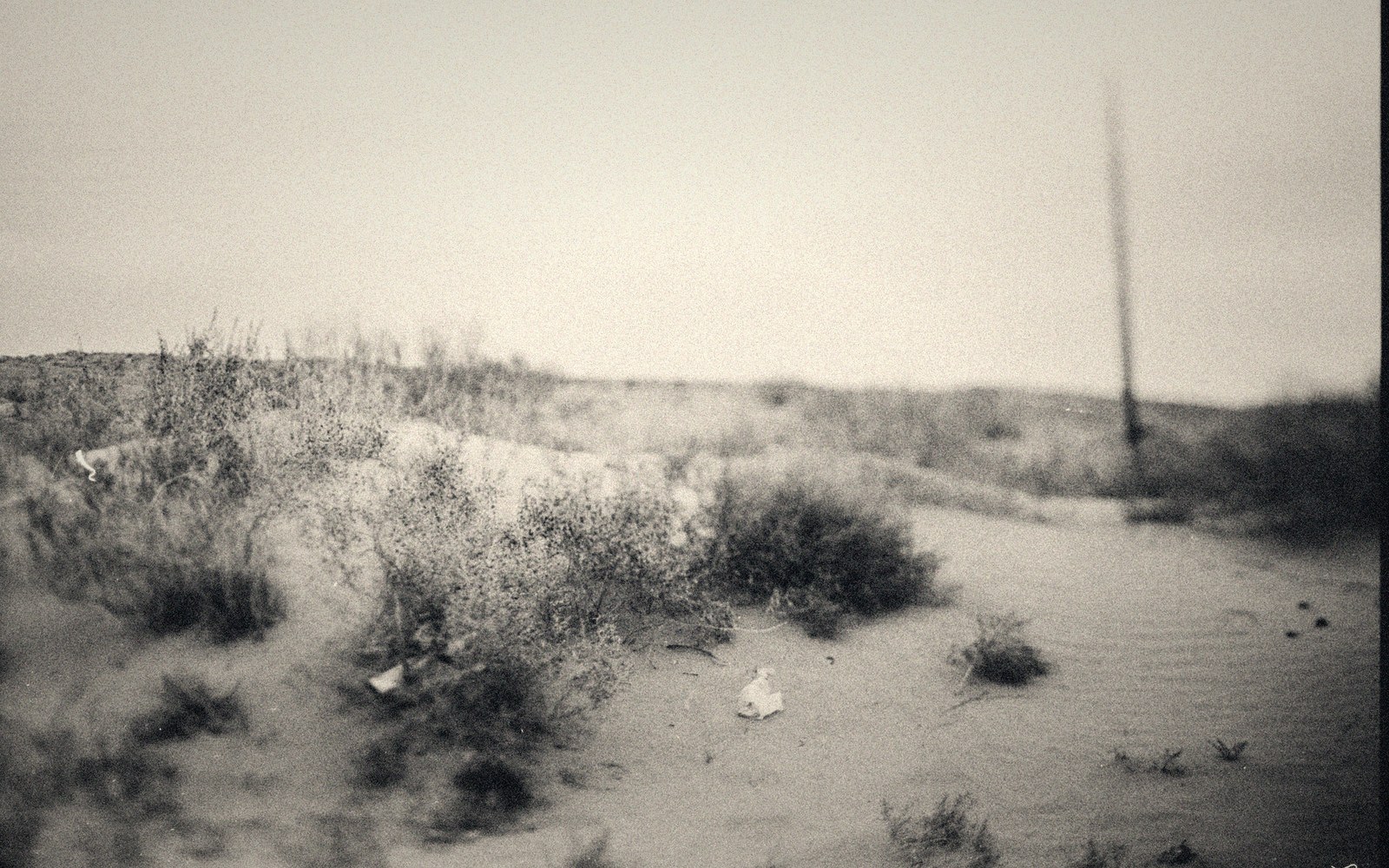
Key productions
Strip 1 / 2 · lifted from the reel01
The Cyclops (1957, dir. Bert I. Gordon) — Allied Artists creature feature, outside Republic but working in the same low-budget grammar
02
The Unearthly (1957) — late-cycle Republic-adjacent production illustrating the same mid-tier grammar
Republic Pictures occupied an awkward middle tier in 1950s Hollywood — above the Poverty Row outfits that shot on a handshake, below the majors who could afford to blow up a miniature city on a backlot stage. When the atomic-creature cycle arrived, Republic joined it not with opticals and matte paintings but with what it had: desert acreage, contract players, and rubber suits that could be filmed in available light.
The 1957 releases are instructive. The Unearthly, distributed by Republic, and The Cyclops — an Allied Artists release, but cut from identical cloth — show a grammar of necessity hardened into signature. Wide desert horizons do the work that process screens could not afford to do. The monster occupies real sunlit space rather than a composited one, and the effect is stranger than the producers probably intended: the creature looks native, as if the landscape produced it. In a film like Gordon's Cyclops, the California locations function less as a stand-in than as an argument — the wilderness already looks irradiated, already inhospitable. Saving money on a painted sky turns out to be better cinema.
02
Suits, similarly, impose their own visual logic. An optical giant can be scaled precisely; a man in a suit must be filmed obliquely, in tight close-up or in forced-perspective rigs that crowd the frame. Republic's creature sequences tend toward the claustrophobic — not because the filmmakers chose dread over spectacle, but because the suit demanded it. The accidental result is that scale becomes psychological rather than mathematical, which is arguably more unsettling.
Production context
Strip 2 / 2 · lifted from the reel01
Republic's tier — above Poverty Row, below the majors; mid-tier economics forced specific visual solutions
02
Practical suits vs. optical composites — cost differential that reversed the aesthetic hierarchy
03
Location-as-set — real exteriors used in lieu of painted backing or process screens
None of this is auteur theory. Republic's nuclear-age pictures were industrial products made quickly by rotating contract crews. But the constraints were consistent enough to generate consistency — a low-budget visual dialect that a drive-in audience could recognise in the first three minutes. The desert, the suit, the crash-zoom onto a face registering horror off-screen: these were not choices. They were the budget, made visible.
Runs with