Frame 05 · The Supporting Programme · examined as evidence, not illustration
The Supporting Programme
Why Ants, Not Missiles
An argument about displacement: the creature feature externalised nuclear dread into a body the audience could watch die in the third reel, giving 1950s cinema a way to process what the civil-defence reels could not resolve.
Civil-defence films could show you the flash, the blast radius, the fallout drift — and then leave you sitting in the dark with no exit. The threat in those reels was invisible, bureaucratic, and permanent. Nothing on screen died.
The creature feature solved that problem structurally. When the queen ant in Them! burns in the Los Angeles storm drain in the film's final minutes, the audience watches a conclusion. The menace has a body; the body can be located; the body can be destroyed with military hardware in the third reel. Nuclear dread, translated into animal form, becomes narrative — and narrative has an ending.
The structural trade-off
Strip 1 / 1 · lifted from the reel
01
Civil-defence films — threat real, no resolution on screen
02
Creature features — threat displaced into visible body, resolution staged in third reel
03
Cost — each clean monster death implied nuclear threat was equally manageable; it was not
This is displacement in its most functional sense. The ants in Them!, the tarantula in Tarantula, the irradiated crab swarms in Attack of the Crab Monsters are not metaphors that need decoding. They are containers built to hold what the actual threat — thermonuclear exchange, fallout drift, slow contamination — refused to hold: the comfort of a solvable problem. Invisible radiation, reclassified as giant animal, becomes something you can train a flamethrower on.
02
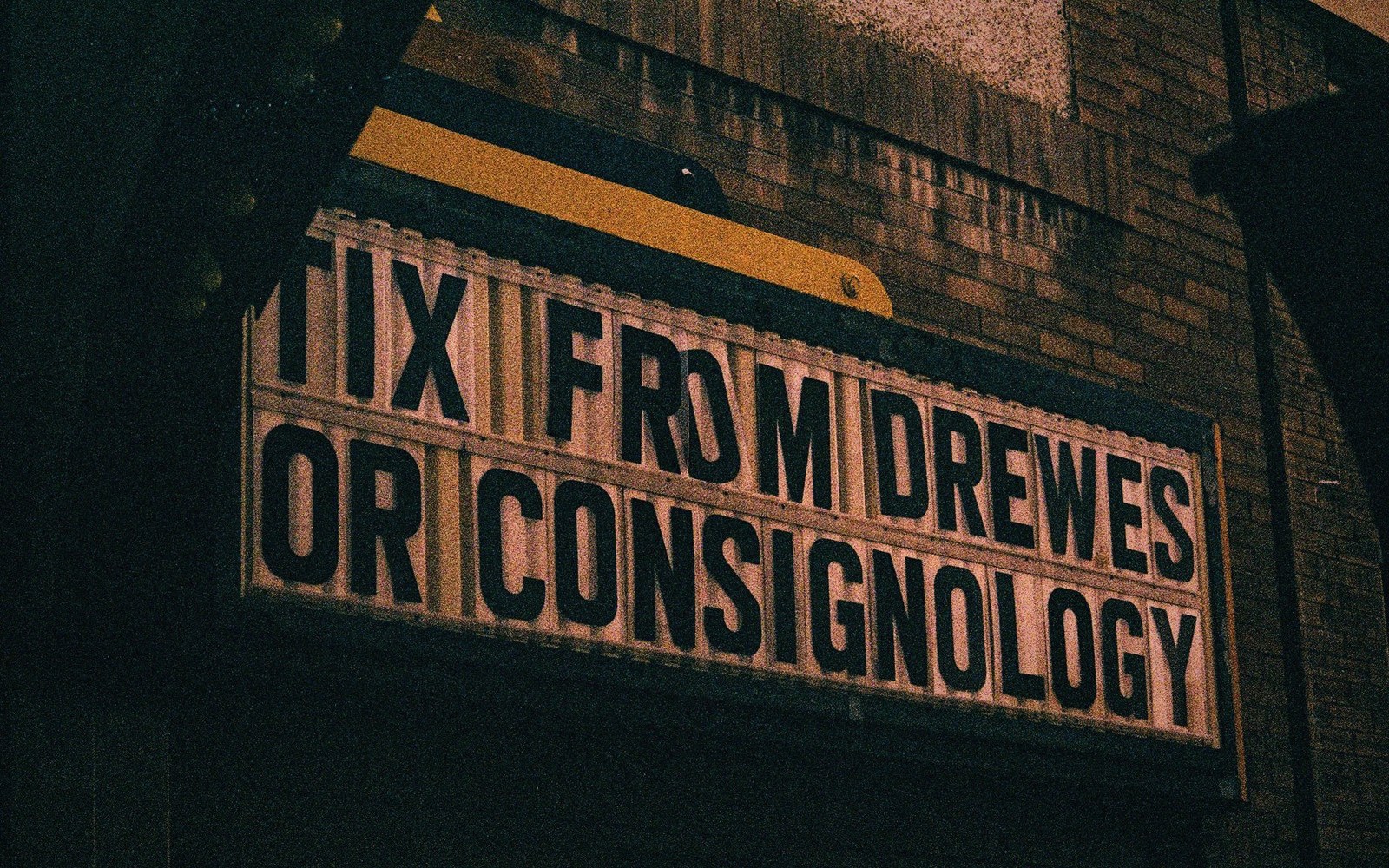
A lit letter-board at street level: the exhibitor’s half of the argument.Photo: David Guerrero / Pexels
The trade was not cost-free. Externalising the dread also trivialised it. Every monster that burned cleanly in reel three quietly suggested that the underlying force which produced it was equally containable — which the civil-defence apparatus knew, and the physics confirmed, was false. The creature feature's resolution was aesthetically satisfying and epistemically dishonest, which is precisely why the cycle ran so long and left audiences feeling, if not safe, at least temporarily discharged.
The ants worked because they could die. That was the whole argument.