Frame 08 · After the Bomb · examined as evidence, not illustration
After the Bomb
The World, the Flesh and the Devil: Three Survivors
Reads the 1959 MGM film as a post-apocalypse picture that is really about what the pre-apocalypse refused to resolve — a piece about the film's racial politics as nuclear-allegory logic, not as a separate social-issues reading..
When the bomb clears the world, what it leaves behind is the argument America was already having.
The Premise Is the Trap
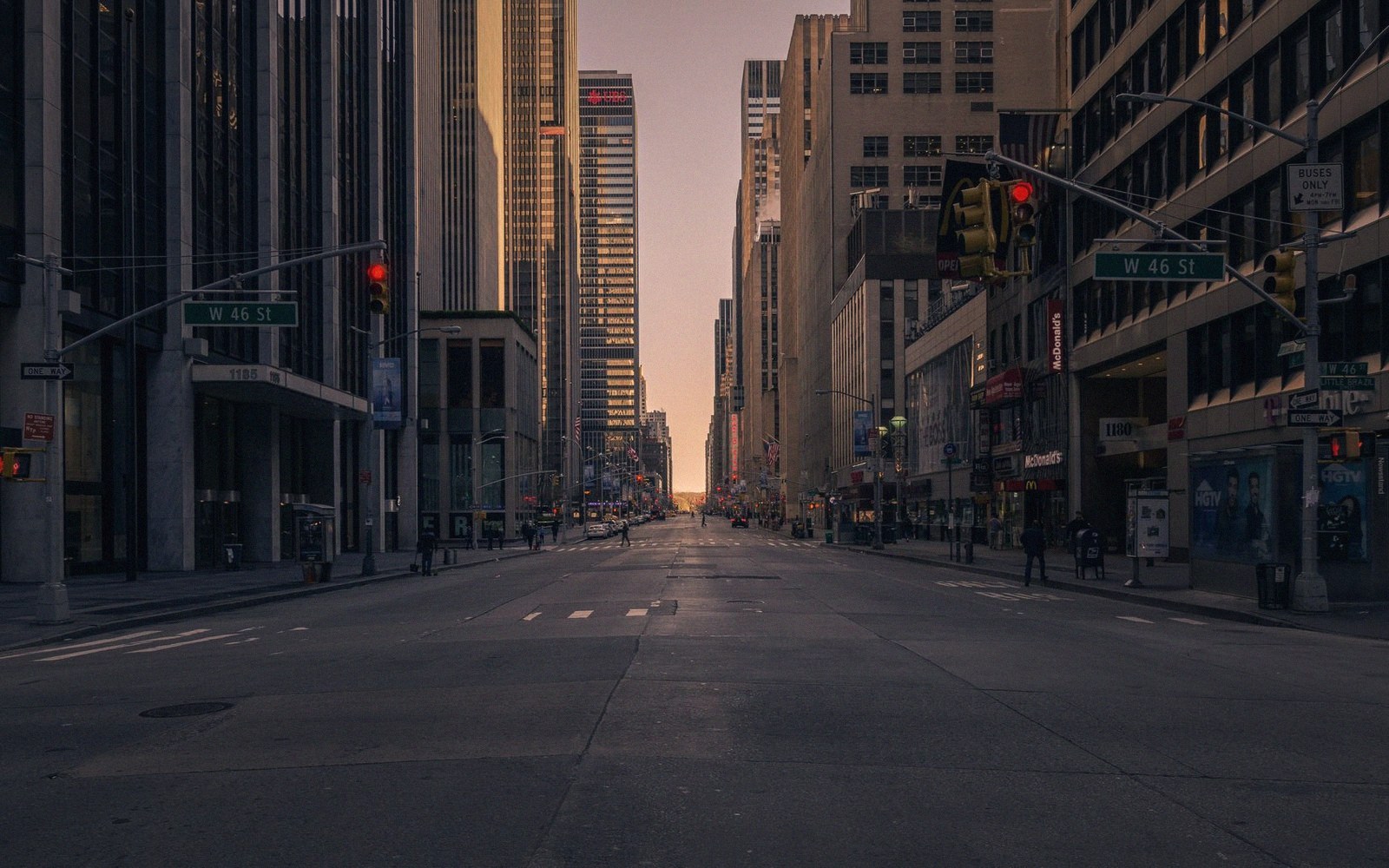
Ranald MacDougall's 1959 MGM production opens on a coal miner, Ralph Burton, sealed underground when the surface world ends above him. Harry Belafonte plays Burton; the casting is not incidental. He digs out into an empty Manhattan — the production actually shot on closed streets, a logistical achievement that gives the film its most arresting images — and the silence is total. No bodies, no blood. The weapon that ended civilisation in The World, the Flesh and the Devil is a radioactive gas, which has the convenient property of disappearing its victims without disturbing the furniture. It is the cleanest apocalypse in the cycle, and that cleanliness is the first hint that the film is not really about extinction at all.
Burton moves into a Midtown apartment, restores power to a city block, broadcasts on shortwave, and waits. Then Inger Stevens arrives as Sarah Crandall, a white woman who had been at sea when the gas dispersed. Two survivors, one city, and immediately the film's real subject asserts itself: in a depopulated America, is the pre-existing racial order still in force? Burton insists on separate apartments. He calls her "Miss Crandall" for longer than any plausible social awkwardness would require. The film is careful — anxious might be the better word — to ensure that nothing between them can be read as presumption on his part. The landscape is post-human; the etiquette is 1958 Alabama.
The geography of the film
Strip 1 / 2 · lifted from the reel
01
Empty Manhattan — the production shot on closed Midtown streets; specific locations include Fifth Avenue and the area around the United Nations building; the deserted cityscape is the film's most visually distinctive element
02
The UN building sequence — where the climactic armed confrontation between Burton and Thacker takes place; the choice of location (an institution built for international conflict resolution) is not accidental
What the Third Man Arrives to Resolve
The drama shifts register when Mel Ferrer appears as Benson Thacker, another survivor, handsome and entirely without Burton's self-imposed restraint. Thacker wants Sarah; the triangle is now explicit. The two men circle each other across empty Manhattan, and MacDougall reaches for a Western grammar: duelling rifles on Fifth Avenue, the broad deserted street as frontier, the showdown as the only available idiom for male competition. It is not subtle framing.
What the film cannot quite bring itself to do — and this is where it becomes genuinely interesting as a cultural document — is follow its own premise to its conclusion. The radioactive gas has killed every human being on earth except three. The only logical next step is obvious. The film retreats from it at every turn, loading the tension onto Thacker's aggression rather than onto the question the premise has actually posed. By the time Thacker fires on Burton near the United Nations building, the film has displaced the real conflict into a conventional thriller mechanism. Who survives the duel becomes the question, and the answer the film offers — the men lower their weapons, Sarah chooses Burton, and the three walk forward together toward an unresolved future — is simultaneously the most radical ending available to a Hollywood film in 1959 and a studied ambiguity that declines to be explicit about what comes next.
02
A steel shot-tower on the flat — the silhouette half the desert pictures were built around.Photo: Jan van der Wolf / Pexels
Allegory as Evasion, Allegory as Argument
Key production context
Strip 2 / 2 · lifted from the reel
01
Release year — 1959, MGM
02
Director — Ranald MacDougall
03
Harry Belafonte — star and co-producer; his production role gave him unusual leverage over the film's ending and location choices
04
Inger Stevens, Mel Ferrer — the other two principals; the entire film is carried by three actors in an otherwise unpopulated city
05
Source material — adapted from M.P. Shiel's 1901 novel The Purple Cloud, substantially reworked
Critics reading The World, the Flesh and the Devil as a civil-rights allegory have always been right, but the term undersells the mechanism. The nuclear annihilation is not a backdrop against which a race-relations drama plays out. The annihilation is the argument: if the existing social order can only be dismantled by killing everyone, what does that say about the order? The film's logic runs both ways simultaneously. The mushroom cloud as reset button is an admission that reform by ordinary means was not expected to work; it is also the film admitting, by its own hesitations and retreats, that even a reset button is not enough — that Burton's self-policing survives the end of the world, because he carries it inside.
Belafonte, who was also one of the film's producers, understood this. He pushed the project toward Manhattan locations and toward an ending that refused the clean resolution a genre picture would normally demand. The final frame — three figures walking into the rubble — was deliberately inconclusive. It does not confirm a future; it only declines to foreclose one. For 1959, that was as far as the frame would stretch.
The film sits awkwardly in the post-apocalypse cycle because it refuses the genre's usual consolations. There is no plan for rebuilding, no scientist with a solution, no younger generation to inherit the earth uncomplicated. On the Beach, released the same year, found its formal problem in the empty street; The World, the Flesh and the Devil fills its empty streets with the same social geometry that built them. The bomb, in MacDougall's film, is not a warning about what we might become. It is an X-ray of what we already were. The three survivors walking into the frame carry that knowledge. Whether they do anything with it, the film refuses to say.