Frame 07 · After the Bomb · examined as evidence, not illustration
After the Bomb
On the Beach and the Problem of the Empty Street
A long critical essay on Stanley Kramer's 1959 adaptation and the specific formal problem of staging extinction without bodies — how the film photographs absence and whether that technique succeeds or evades.
Stanley Kramer's On the Beach arrived in December 1959 with simultaneous premieres in seventeen cities across seven countries — a publicity operation that announced, with characteristic Kramer solemnity, that this was not merely cinema but an event with geopolitical weight. The film had Nevil Shute's bestselling 1957 novel behind it, Gregory Peck, Ava Gardner, Fred Astaire and Anthony Perkins in front of the camera, and the whole of postwar liberal anxiety pressing it forward. It was released by United Artists, photographed in Melbourne and its surrounds by Giuseppe Rotunno, and it remains, six and a half decades later, the most formally radical of all atomic-age features — not because of what it shows but because of what it refuses to show.
The premise is unusually pure: a nuclear exchange in the northern hemisphere has lofted enough fallout to poison the planet. The contamination is moving south. Australia, the last habitable landmass, has months remaining. The film is set in that waiting period. Nobody is incinerated; nobody is already dead. The horror is entirely anticipatory, and Kramer must photograph the last human beings alive while they go to the beach and drink wine and race cars. The formal problem this creates is intractable, and watching how Kramer's film presses against it is an education in the outer limits of screen naturalism.
Photographing the Absence
The film's most haunting passages are its silent ones. When the American submarine USS Sawfish makes contact with San Francisco and a crew member is sent ashore in a contamination suit, the sequence that follows is among the most carefully composed in 1950s Hollywood cinema. The streets are undisturbed. A Coca-Cola bottle turns a tap by a window; a telegraph machine taps in an empty room. No bodies. No wreckage. No fire. The city simply stopped, and Rotunno photographs that stillness with a lucidity that refuses to aestheticise destruction in any of the conventional ways.
This is the film's genuine formal achievement and its genuine formal gamble. The empty street is not a war ruin, not a mushroom cloud aftermath, not the scorched landscape of a blast radius. It is an ordinary street, and the camera holds on it just long enough that the ordinary becomes intolerable. Kramer and Rotunno are doing something that requires real nerve: trusting the viewer to supply the dread. The question the film raises — and which critics have been disputing since its premiere — is whether that trust is earned or whether the empty street is an evasion that lets the audience off a hook it should not be let off.
The counter-argument is strong. Shute's novel is willing to be specific about the dying; the film is not. Radiation sickness on screen, as this guide has examined elsewhere, is typically sanitised, but On the Beach goes further than most — it barely shows the sickness at all. When characters take their government-issued suicide pills in the film's final movement, the camera does not follow them into that. It turns away. Dwight Towers (Peck) sails the Sawfish back into the contaminated north rather than die on land. Moira (Gardner) takes her pill offscreen. The film ends on a deserted Melbourne street, a revival-meeting banner blowing in the wind reading "There Is Still Time, Brother," and that is all Kramer will give us.
Key formal device
Strip 1 / 2 · lifted from the reel
01
The empty San Francisco street sequence — photographed by Giuseppe Rotunno; the central case study for the "staging absence" argument
What the Empty Street Actually Costs
Whether this constitutes cowardice or discipline is the question that has structured every serious discussion of the film, and it is a question worth pushing rather than resolving too quickly. Kramer's instinct — that the sight of mass death would aestheticise what should be unthinkable — is not naive. Every atomic-age film that attempts to visualise the dead in any volume risks two failures: the inadequacy of its budget (corpses are expensive to stage convincingly at scale) and, worse, the possibility that the audience responds to destruction as spectacle. The mushroom cloud had been spectacular since 1945. Kramer did not want another mushroom cloud.
But the empty street has its own problem. It displaces the emotional weight entirely onto the living, and the living in On the Beach are not always equal to that weight. Peck's Dwight Towers is so buttoned inside his grief for a wife and children already dead in Connecticut that he becomes opaque. The romance with Gardner's Moira Davidson, the film's most commercially conventional element, does not open him; it resolves nothing. Fred Astaire's Julian Osborn, the racing-driver scientist who represents something like conscience, lands the film's truest line — a quiet admission that the war was started by accident, by automated systems responding to signals no human authorised — and then dies alone in his garage with his engine running.
Astaire, working against the grain of everything his screen persona had ever signified, is the film's real argument. Casting the century's most graceful body as a man accepting extinction with practised composure is the kind of decision that works beyond the script. It is not a trick, and it is not sentimental. It is Kramer's best casting choice in a film full of sound ones, and it earns the restraint he practices everywhere else.
Production facts
Strip 2 / 2 · lifted from the reel
01
Released December 1959 by United Artists; simultaneous premieres in seventeen cities, seven countries
02
Directed by Stanley Kramer; novel source: Nevil Shute, 1957
03
Principal photography in Melbourne, Australia
04
Cinematographer: Giuseppe Rotunno
05
Cast: Gregory Peck, Ava Gardner, Fred Astaire, Anthony Perkins
06
Running time: 134 minutes
02
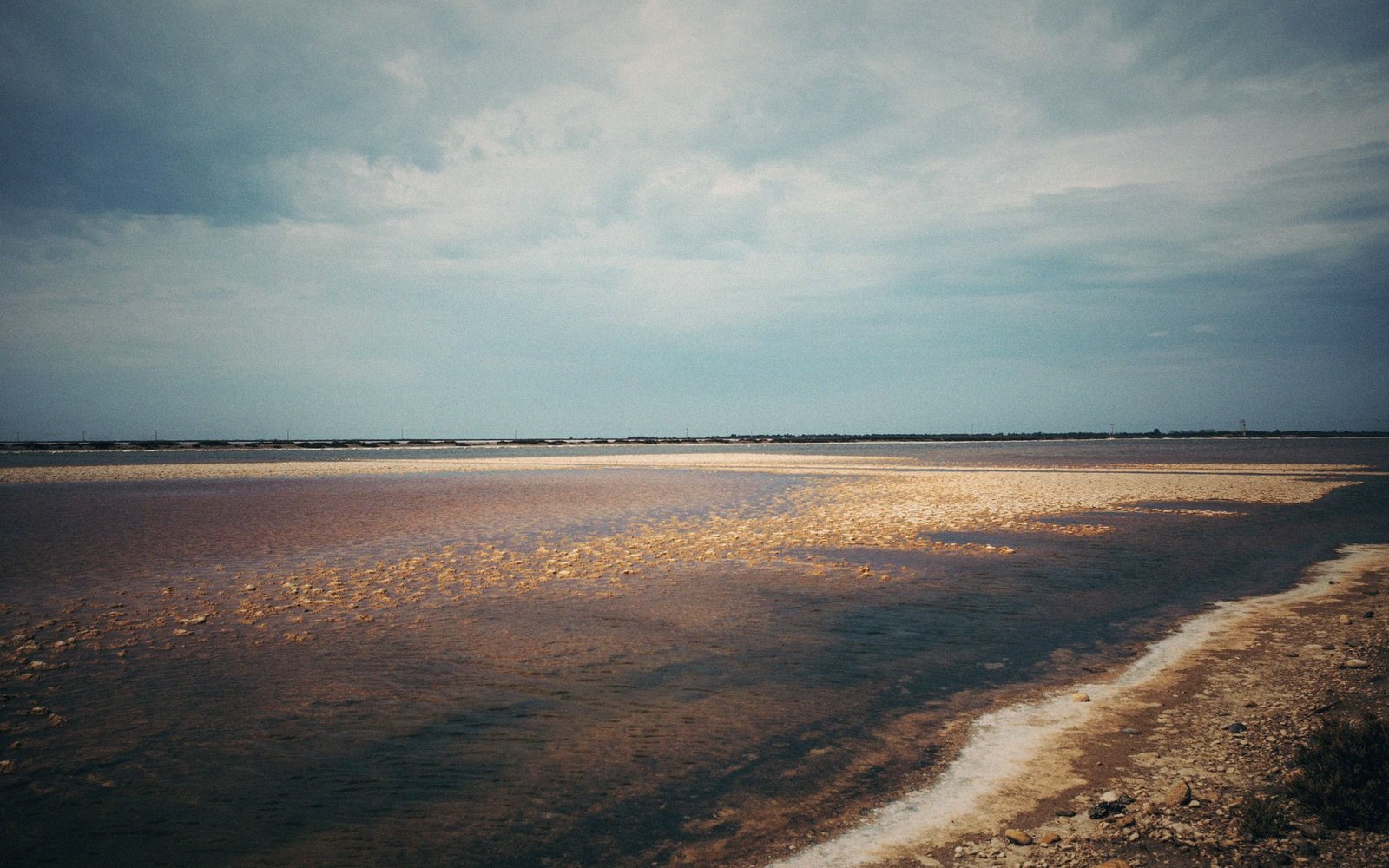
The flat empty ground the survival picture rents instead of building.Photo: Andreas Schnabl / Pexels
The Formal Stakes
What On the Beach is attempting, at its most ambitious, is something cinema had not tried before and has rarely tried since: the representation of total extinction without recourse to the imagery of violence. The film proposes that the appropriate image for the end of humanity is not fire but a clean, windswept street with a banner no one is alive to read. This is an explicitly theological gesture, whether Kramer intended it or not — the image of judgment without a judge, of consequence without cause visible in the frame.
The film succeeds at this in its best twenty minutes, and those twenty minutes are genuinely extraordinary. It fails, unevenly, in the passages where the plot must generate conventional dramatic motion — the submarine mission, the romantic tension, the subplot involving Perkins's young couple that strains for intimacy and achieves calculation instead. The film runs 134 minutes and is too long by perhaps twenty. The reel in which it most obviously drags is the third, where the racing sequence at Phillip Island serves its symbolic function (living fast before dying) but takes considerably more screen time than that function requires.
None of this diminishes what the film got right, or how alone it was in getting it right. At the same moment that the creature-feature cycle was displacing nuclear dread into giant-insect allegory — a displacement that had its own honesty and its own limits — Kramer made a film in which the word "nuclear" is spoken plainly, the cause is human error, the outcome is total, and the camera holds on an empty street and asks the audience to sit there with it.
The empty street is not a solution to the problem of staging extinction. It is an acknowledgment that the problem cannot be solved inside a frame. That acknowledgment, made clearly and without sentimentality in 1959, is more than most of the cinema that followed managed. The banner keeps blowing. Nobody comes.