RadiationCinema

Frame 19 · Newsreel & Civil Defence · examined as evidence, not illustration

Newsreel & Civil Defence

Operation Cue and the Mannequin Houses

Examines the 1955 AEC test that dressed suburban tract houses with department-store mannequins and filmed the blast — how the footage was edited for public release and how it read differently to the engineers who shot it..

By the House Critic·Newsreel & Civil Defence·3 min read

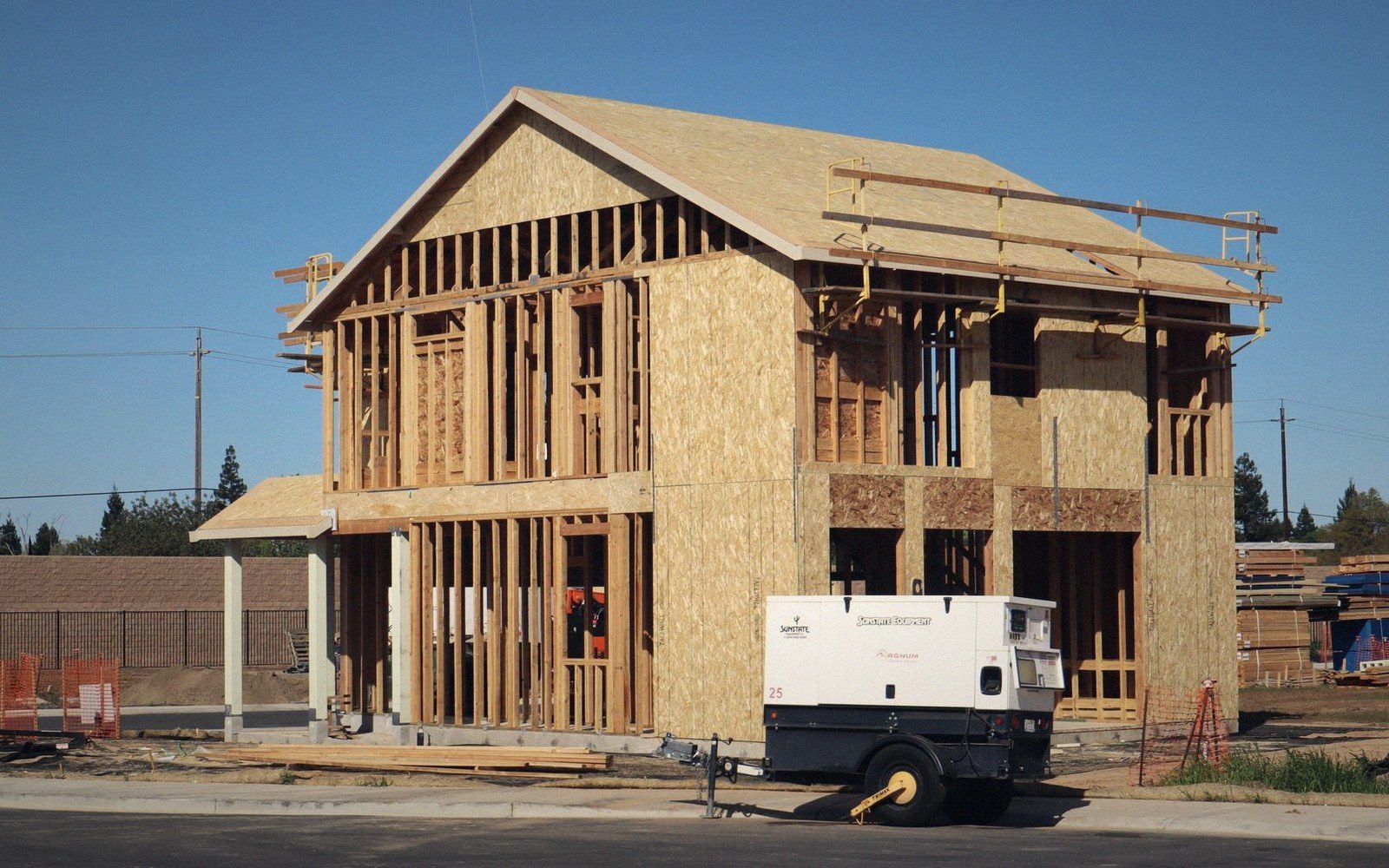
01A two-story house under construction with plywood sheathing and a towable generator parked outside
Operation Cue and the Mannequin Houses — the frame this piece is written against.Photo: D Goug / Pexels

The AEC sent a camera crew to Nevada in 1955 to film a suburban neighbourhood being destroyed. The footage was edited twice — once for engineers, once for everyone else.

Two Versions of the Same Blast

Operation Cue was part of the Apple-2 shot within the 1955 Nevada Test Site series designated Operation Teapot. The Atomic Energy Commission, working with the Federal Civil Defense Administration, built fourteen structures on Frenchman Flat — wood-frame houses, a brick office building, an underground shelter — and stocked them with furniture bought from department stores in Salt Lake City and Los Angeles. Into the chairs and onto the beds they placed mannequins: dressed, posed, oriented toward the windows. Cameras were placed inside and outside the structures, and on the morning of 5 May 1955 a twenty-nine-kiloton device was detonated roughly a mile from the nearest house.

The footage that came back showed the mannequins in three states: untouched in the underground shelter; scorched but intact in the brick structure; destroyed, along with the rooms that had contained them, in the wood-frame houses nearest the burst. This was not dramatic reconstruction. The cameras caught the actual sequence — thermal pulse, then overpressure wave, then debris — and what the mannequins communicated, precisely because they were not human, was something close to pure engineering data. Their posture told you which surfaces were shadowed, which walls held, which window orientation caught the full radiant flux.

The FCDA cut two versions of this material. The technical record went to civil-defence planners and structural engineers as unnarrated footage and printed reports: numbers on peak overpressure, thermal yield, structural survivability by building type. The public version — distributed through newsreels, civic groups and local television — received narration, music and a considerable editorial reordering. The sequence was rebuilt around reassurance: houses built to code could be prepared, stocked, shuttered. A woman mannequin found still seated in the brick house's basement became the central image, the camera lingering on her placid expression as the narrator explained what she represented.

Key facts

Strip 1 / 2 · lifted from the reel
01

Test designation — Apple-2 shot, Operation Teapot series, Nevada Test Site, 5 May 1955

02

Yield — twenty-nine kilotons

03

Site — Frenchman Flat, Nevada Test Site

04

Structures built — fourteen, ranging from wood-frame houses to brick commercial building to underground shelter

05

Mannequins — sourced from department stores in Salt Lake City and Los Angeles

06

Commissioning bodies — Atomic Energy Commission (AEC) and Federal Civil Defense Administration (FCDA)

07

Two distinct cuts of footage produced: technical/unnarrated and public/narrated

What the Edit Did

02A mid-century civil-defence film still showing an instructor pointing at a wall chart
An instructor and a wall chart, adults only in frame: the format the state films used.Photo: cottonbro studio / Pexels

The reordering was not dishonest in any single detail, but it was architecturally dishonest. The wood-frame houses closest to the burst — where the mannequins and most of the furnishings had been obliterated or thrown hundreds of feet — appeared briefly and without dwelling. The camera moved quickly to the structures that had survived, and survival became the governing idea. An audience watching the newsreel version understood the test as a proof of civil-defence preparedness. An engineer reading the full technical summary understood it as a calibration of the destruction gradient.

The two versions compared

Strip 2 / 2 · lifted from the reel
01

Technical cut — unnarrated, distributed to civil-defence planners and structural engineers; accompanied by printed reports with overpressure and thermal yield data

02

Public/newsreel cut — narrated, scored, editorially reordered around survival and preparedness; the basement mannequin as emblematic image; wood-frame destruction minimised

The mannequins themselves became, in the public cut, a kind of surrogate family: the seated woman, a child's bed with a figure in it, a man at a dining table. That the same objects existed as data points in a yield calculation was not information the narrated version offered. The gap between the two readings is not propaganda in the crude sense — nobody lied about survival rates — but it is a lesson in editorial framing as argument. The footage showed what it showed; the question was always where the cut came.

Operation Cue's public footage circulated widely enough to become a visual reference point for later civil-defence films and B-picture sets. The dressed interiors, the posed mannequins, the overhead shot of a suddenly roofless house — these images entered the general vocabulary of nuclear cinema not because filmmakers licensed them directly but because they had already been seen. By the late 1950s, any audience watching a blast sequence on screen had probably watched this one.