Frame 23 · Newsreel & Civil Defence · examined as evidence, not illustration
Newsreel & Civil Defence
The Nevada Test Site Footage Studios Licensed
A short, factual account of the AEC stock-footage licensing programme and which productions used it — a piece about the transaction, not the tests themselves, treating the archive as a commercial object with a paper trail..
The AEC ran a stock-footage desk. Hollywood ran a budget. The transaction that followed shaped a decade of screen grammar.
The Licence and the Ledger
The Atomic Energy Commission shot its own tests — at the Nevada Test Site north of Las Vegas and at the Pacific Proving Grounds — with military camera crews operating under strict protocols. The resulting footage was not simply archived. The AEC's Division of Public Information actively made selected reels available to commercial producers, functioning in practice as a clearinghouse: studios paid licensing fees, received 16mm or 35mm prints of approved shots, and were permitted to cut them into dramatic features and documentary shorts under conditions that prohibited any material that compromised classification requirements.
The transaction in brief
Strip 1 / 2 · lifted from the reel
01
AEC Division of Public Information — the federal office that managed the clearinghouse, part of the Atomic Energy Commission
02
Nevada Test Site / Yucca Flat — primary location for the above-ground tests whose footage entered the licensing pool
03
Pacific Proving Grounds — secondary source location (Marshall Islands tests); less commonly licensed to Hollywood productions
04
Federal Civil Defense Administration — parallel licensee; its films created a second route by which test footage entered the B-picture supply chain
05
Double-flash — the two-pulse light signature of a nuclear detonation; among the visual elements cleared for commercial release
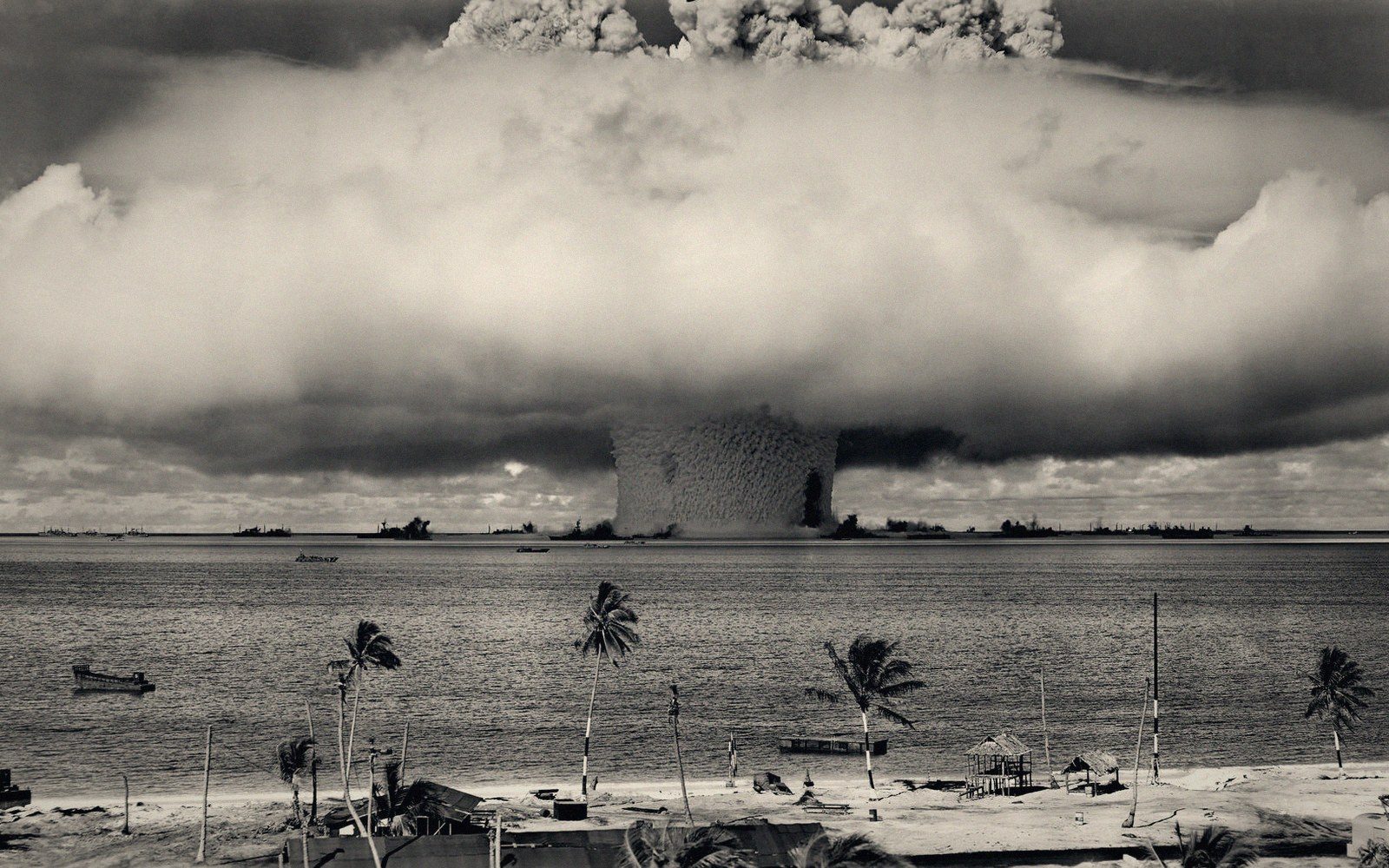
The specific shots on offer were well defined. Exterior detonation sequences — the fireball expanding through the desert pre-dawn, the characteristic double-flash, the stem-and-cap cloud rising over Yucca Flat — were cleared for commercial use. What was withheld was anything showing instrument bunkers, diagnostic equipment, or the human observers in the forward trenches. The licensor was careful about what the reel contained and equally careful about what it did not.
The beneficiaries were clustered at the B-picture end of the market. Universal, Allied Artists, and American International Pictures all drew on this pool during the mid-1950s cycle. Universal's science-fiction pictures of the period drew on this kind of cleared footage, and the mushroom cloud that bookends several AIP releases is identifiably drawn from the same cleared Nevada reel — editors cutting to it regardless of whether the nominal geography of the picture placed the action anywhere near the desert Southwest. Republic Pictures, operating on margins that made any free or cheap production element attractive, was a consistent user of the programme throughout the decade.
Who bought and what they cut in
Strip 2 / 2 · lifted from the reel
01
Universal, Allied Artists, AIP, Republic Pictures — the studios most consistently documented as users of the AEC footage programme in the 1955–1960 cycle
02
Cleared detonation shots — the fireball and stem-and-cap cloud sequences that editors cut into dramatic features as stock inserts
03
Civil-defence training films — the intermediary object through which AEC footage re-entered the studio supply chain a second time
02
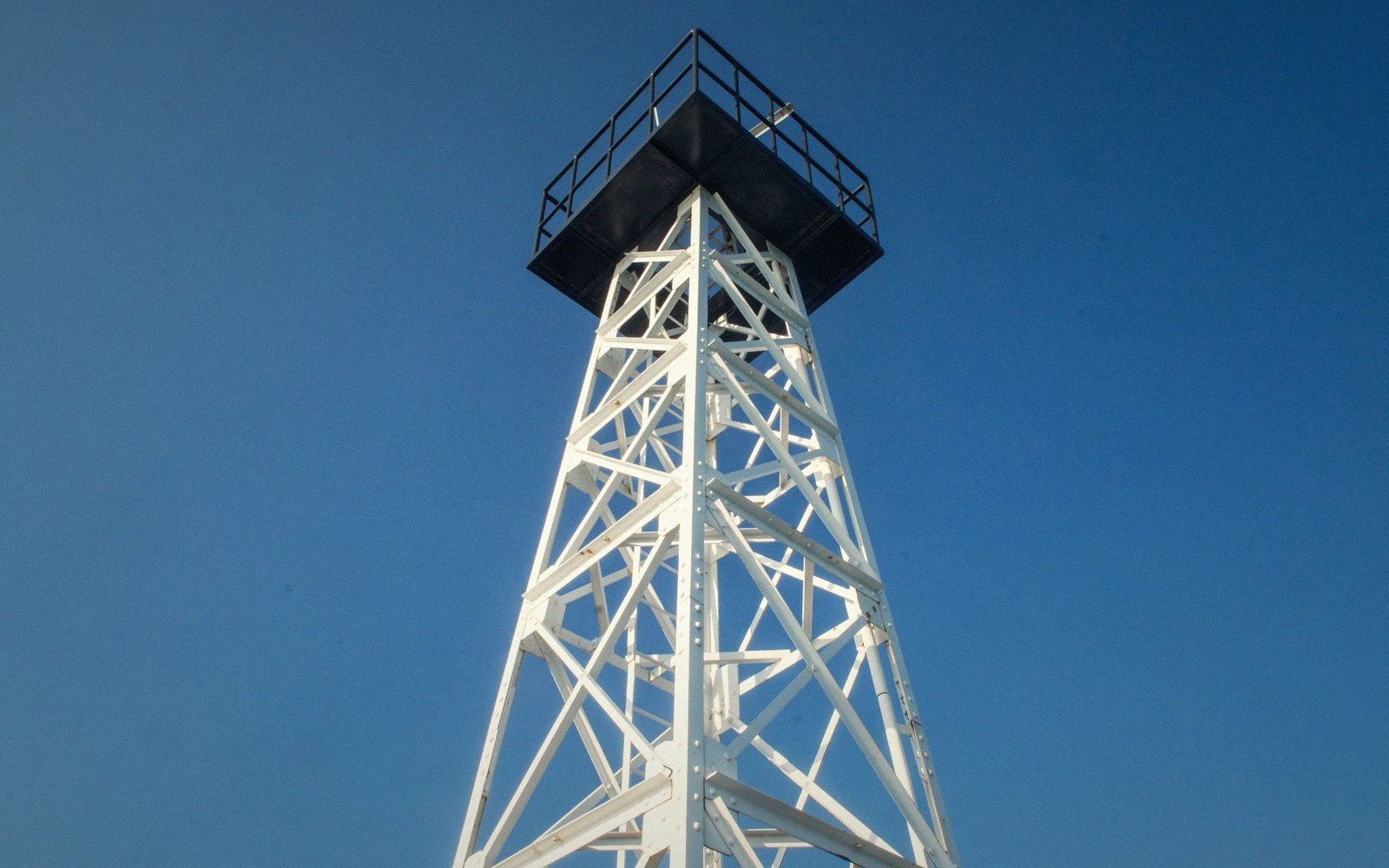
A steel shot-tower on the flat — the silhouette half the desert pictures were built around.Photo: Jan van der Wolf / Pexels
The footage also migrated into civil-defence contexts simultaneously. The same AEC clearinghouse supplied material to the Federal Civil Defense Administration, which incorporated it into training films that were themselves later licensed back to studios as B-roll. The same twenty-second shot of a clapboard house disintegrating under overpressure appears in public-information reels and, reframed and re-timed, in dramatic features — the same physical print, the same grain, the same Nevada morning light.
What the programme achieved commercially was a standardisation of the mushroom cloud's screen appearance. Because everyone was drawing from the same approved catalogue, the visual grammar became uniform across studios and across budgets. The image the public recognised as the nuclear weapon on screen was precisely the image the AEC had chosen to release.